
Automated Displacement Tracking for Asphalt Mixture Crack Analysis
DOI:
https://doi.org/10.54327/set2026/v6.i2.396Keywords:
Asphalt mixtures, Displacement-based indicators, IDEAL-CT, Crack behaviorAbstract
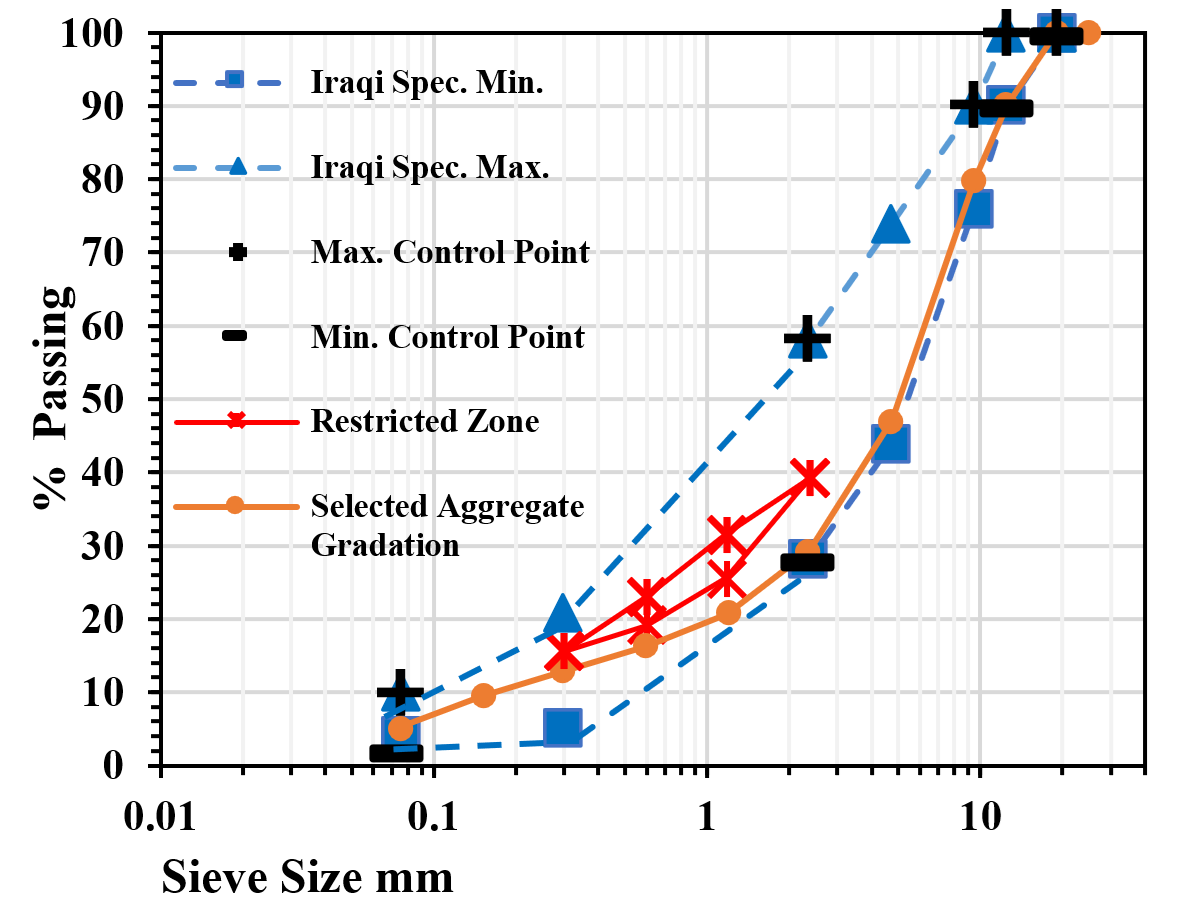
Cracking resistance plays a key role in the durability and service life of asphalt mixtures. Although the Indirect Tensile Asphalt Cracking Test (IDEAL-CT) is widely used to evaluate cracking performance, it mainly relies on global strength-based parameters and provides limited information about how cracks initiate and propagate. This study presents an image-based framework for evaluating crack evolution in asphalt mixtures prepared with conventional (40/50) and modified binders. A dense-graded limestone mixture was designed using the Superpave method with air-void content 4% and an optimum binder content of 5.4%. The modified binder contained 4% of a locally developed polymer-based additive. IDEAL-CT tests were performed at 25 °C, while crack development was recorded using two high-resolution cameras (4K resolution at 60 frames per second (fps)). The recorded videos were analyzed using Tracker software (Ver. 6.3.4) to obtain displacement data, from which four displacement-based indicators (M1-M4) were developed to describe crack initiation, propagation duration, crack growth rate, and propagation stability. The results showed that the modified mixtures exhibited slower crack growth, greater propagation stability, and a lower crack propagation rate than the unmodified mixtures. The most significant improvement was observed during the crack propagation stage rather than at crack initiation, indicating that binder modification mainly influenced the crack growth mechanism. Overall, the proposed framework provides a practical way to monitor crack evolution and complements conventional IDEAL-CT indices by offering additional insight into fracture behavior, which can support the development and evaluation of asphalt mixtures with improved crack resistance.
Downloads
Downloads
Published
Issue
Section
Categories
License
Copyright (c) 2026 Hassan Adnan Hassan, Abdulhaq Hadi Abedali

This work is licensed under a Creative Commons Attribution 4.0 International License.
Authors are permitted and encouraged to post their work online (e.g., in institutional repositories or on their website, social networking sites, etc).


 © SET Journal