
Flood Inundation and Hazard Modeling Using Integrated HEC-RAS 2D and ArcGIS: A Comparative Assessment of Flood Events in the Molibagu River Watershed
DOI:
https://doi.org/10.54327/set2026/v6.i2.380Keywords:
Molibagu River, flood inundation, HEC-RAS, ArcGIS, hydrological hazard indexAbstract
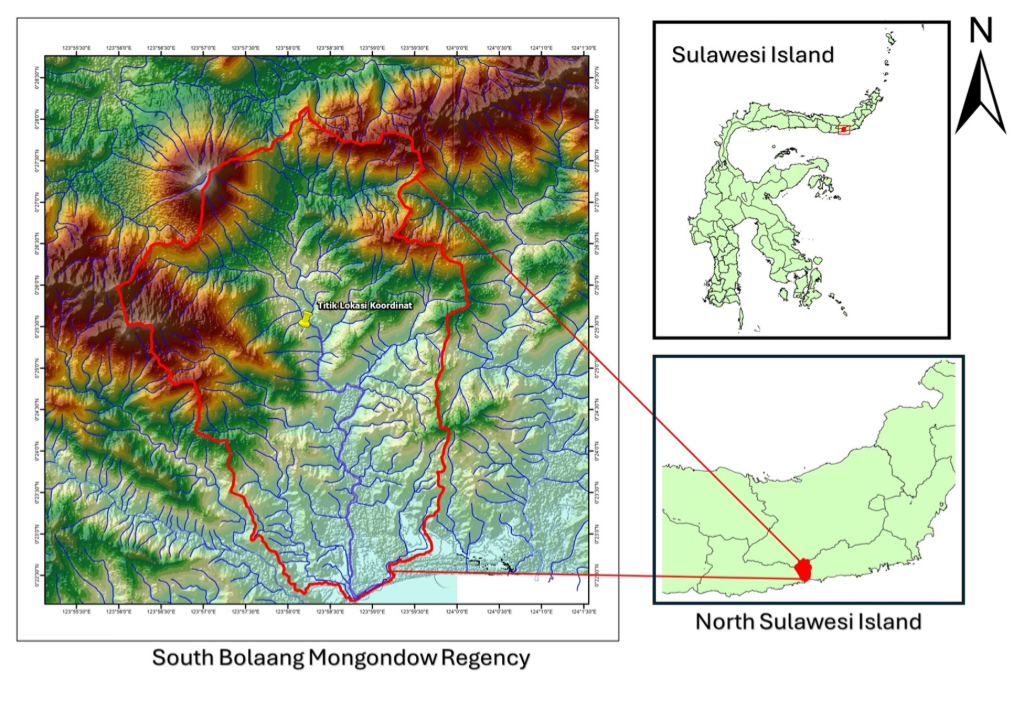
Flooding has become a major environmental issue in rapidly developing urban areas due to increasing rainfall intensity. This study develops an integrated analytical framework to analyse the relationship between rainfall variability, water discharge, flood inundation, and flood hazard modeling in the Molibagu River watershed. Hydrological analysis was conducted using thiessen polygon rainfall estimation and frequency distributions, while flood discharge was simulated using hydrologic modeling system (HEC-HMS), and river analysis was performed using a river analysis system two-dimensional (HEC-RAS 2D) approach integrated with ArcGIS software. The results indicate significant increases in rainfall intensity, peak discharge, and flood inundation extent between 2011 and 2020 across all return periods. Peak discharge for the 2-year return period increased from 44.42 m³/s to 82.42 m³/s, while flood inundation expanded from 0.531 km² to 1.257 km². Similarly, the 100-year return period showed substantial increases in both discharge and inundation extent. Spatial analysis using the hydrological hazard index (HHI) indicates a shift from low to higher hazard levels, reflecting increased flood vulnerability due to intensified hydrometeorological conditions and changing watershed conditions. These findings highlight the importance of integrated hydrological and spatial modeling to improve flood risk assessment and support effective, sustainable flood mitigation strategies.
Downloads
Downloads
Published
Issue
Section
Categories
License
Copyright (c) 2026 Ficky Marcellino Oroh, Joko Nugroho, Olivia Maria Tumurang, Fiska Chintya Ezra Pangalila, Ronaldo Toar Palar, Kelvin Haryono Auwyanto, Misel Boro Allo

This work is licensed under a Creative Commons Attribution 4.0 International License.
Authors are permitted and encouraged to post their work online (e.g., in institutional repositories or on their website, social networking sites, etc).


 © SET Journal