
Benefits of Proactive Planning of High-Performance Aircraft Training Operations in Flexible Airspace Structures for Pollution Reduction
DOI:
https://doi.org/10.54327/set2026/v6.i2.374Keywords:
civil-military ATM performance indicators, flexible airspace structures, high-performance aircraft training operations, improvement of environmental protectionAbstract
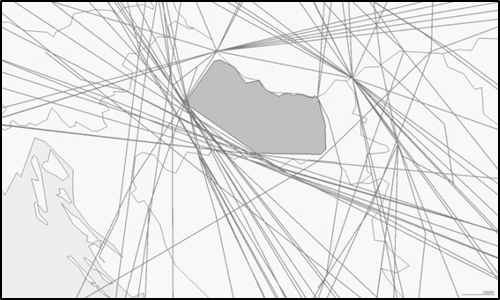
The flexibility of airspace use is at odds with its predictability. The extent of unplanned military activity, although a second-order factor relative to traffic variability, directly influences civil traffic and its pollution footprint. In this research, the assessment of the benefits of proactive planning of high-performance aircraft training operations in flexible airspace structures is performed to examine the possibility of reducing the pollution footprint and the improvement of environmental protection issues by shifting the operational time-frame. Assessment has been performed through a series of simulations on the actual traffic samples using the EUROCONTROL NEST - Network Strategic Tool. The initial impact scenario with flexible airspace structures available without restrictions proved the traffic sample validity. On top of the initial scenario, the reference scenario and the modified activation scenario were simulated, with flexible airspace structures not available in the periods reserved for military high-performance aircraft. Several civil-military ATM performance indicators were developed to compare the reference results and the modified activation scenarios. Specific findings of the research indicate the possible quantitative benefits of proactive planning of high-performance aircraft training operations in flexible airspace structures as well as the constraints of the process.
Downloads
Downloads
Published
Issue
Section
Categories
License
Copyright (c) 2026 Nikola Mostarac, Tomislav Mihetec, Andrea Reščić

This work is licensed under a Creative Commons Attribution 4.0 International License.
Authors are permitted and encouraged to post their work online (e.g., in institutional repositories or on their website, social networking sites, etc).


 © SET Journal